We use cookies to make this site work. We'd also like to set optional cookies so we can understand how the site is used and improve it. We will not set optional cookies unless you accept them. You can change your choice at any time from the Cookie settings link in the footer.
Strictly necessary cookies
These cookies are required for the site to work. They store your cookie preferences and keep your session secure. They are exempt from consent under PECR Regulation 6(4) because they are essential to deliver the service you have requested.
Optional cookies
Optional cookies help us understand how the site is used and provide additional features such as analytics, accessibility tools and translation. We will only set them if you accept.

Welcome to our sensory guide
We understand that visiting the doctor can sometimes feel stressful, especially if you have not been here before. This guide has been created to help you know what to expect when you visit Queensway Medical Centre.
This guide may be helpful if you feel anxious, are autistic, are sensitive to noise, lights or busy environments, or simply like to know what to expect before a visit.
We hope this guide helps you feel more relaxed, prepared and confident before your appointment.
Arriving at the Building
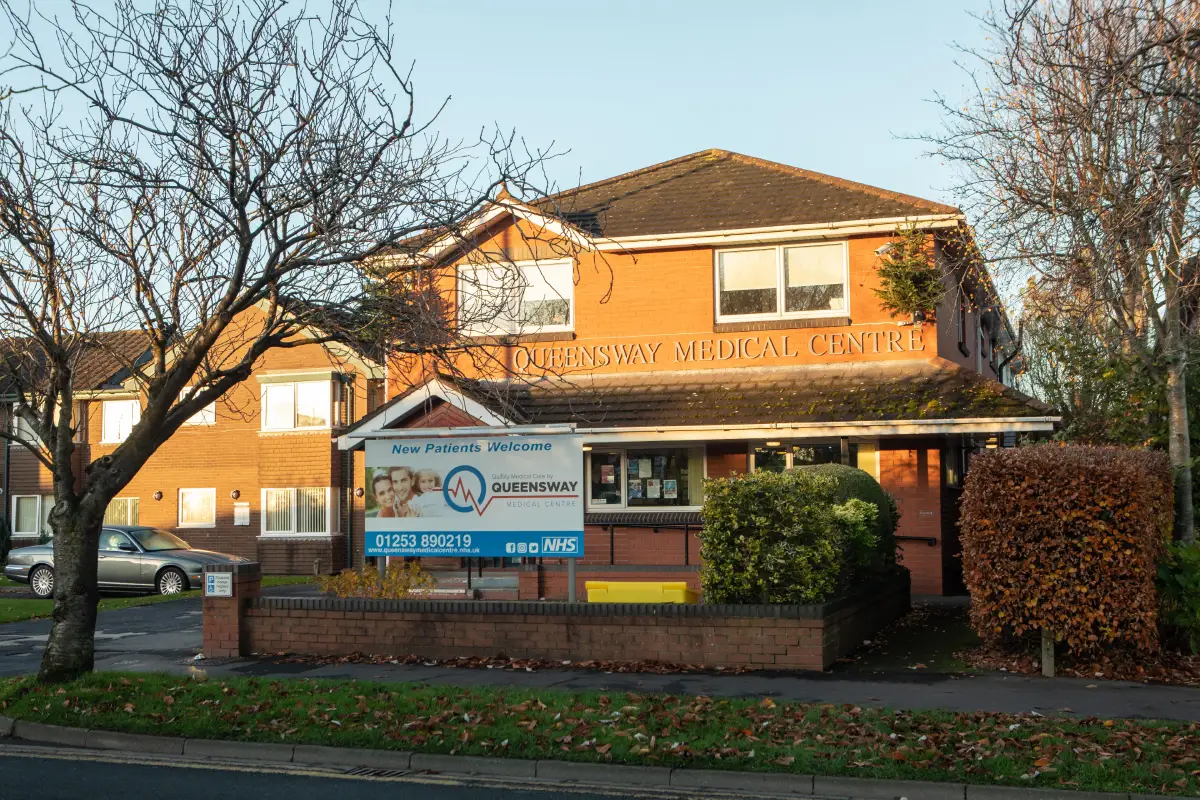
- The building is called Queensway Medical Centre.
- You will see the name in large turquoise letters above the entrance.
- The entrance has large glass doors.
- The first set of doors opens automatically and leads into the foyer. There is then a second set of glass doors that leads into the waiting room.
- Outside the building, you may hear traffic, people talking, footsteps, or delivery vehicles.
- At busy times, there may be people arriving, leaving, or waiting near the entrance.
- The lighting outside will vary depending on the weather and time of day. In the evening, the area outside may be darker, while the lights inside the building may appear bright through the glass.
- The automatic doors may make a quiet mechanical sound when they open and close.
Reception desk and self-check-in screen
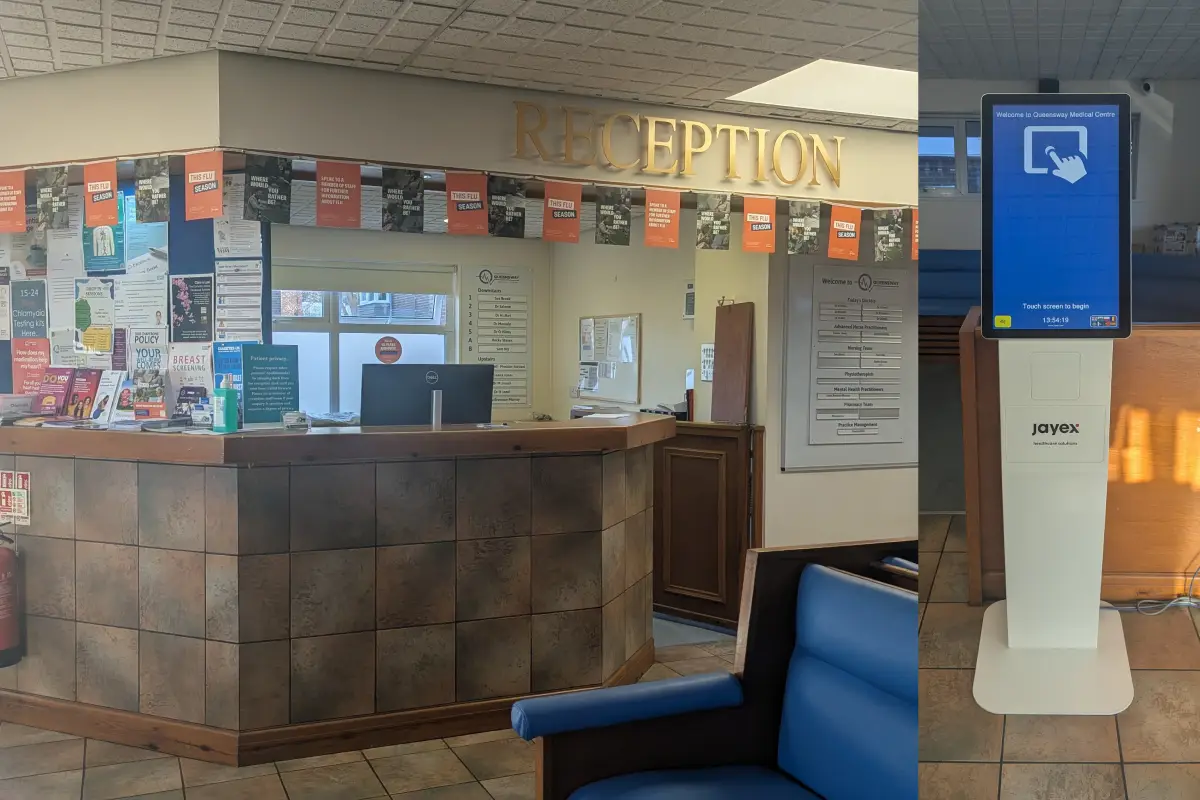
- There is a wooden reception desk in the waiting room with large, gold letters above saying “Reception”.
- As you enter, you will see a large self-check-in screen where you can check in for your appointment.
- If you would rather not use the screen, you can speak to a receptionist at the reception desk and let them know you have arrived.
- The self-check-in screen is a touchscreen and may appear bright.
- After checking in, you can choose any available seat in the waiting room where you feel most comfortable.
Waiting Room
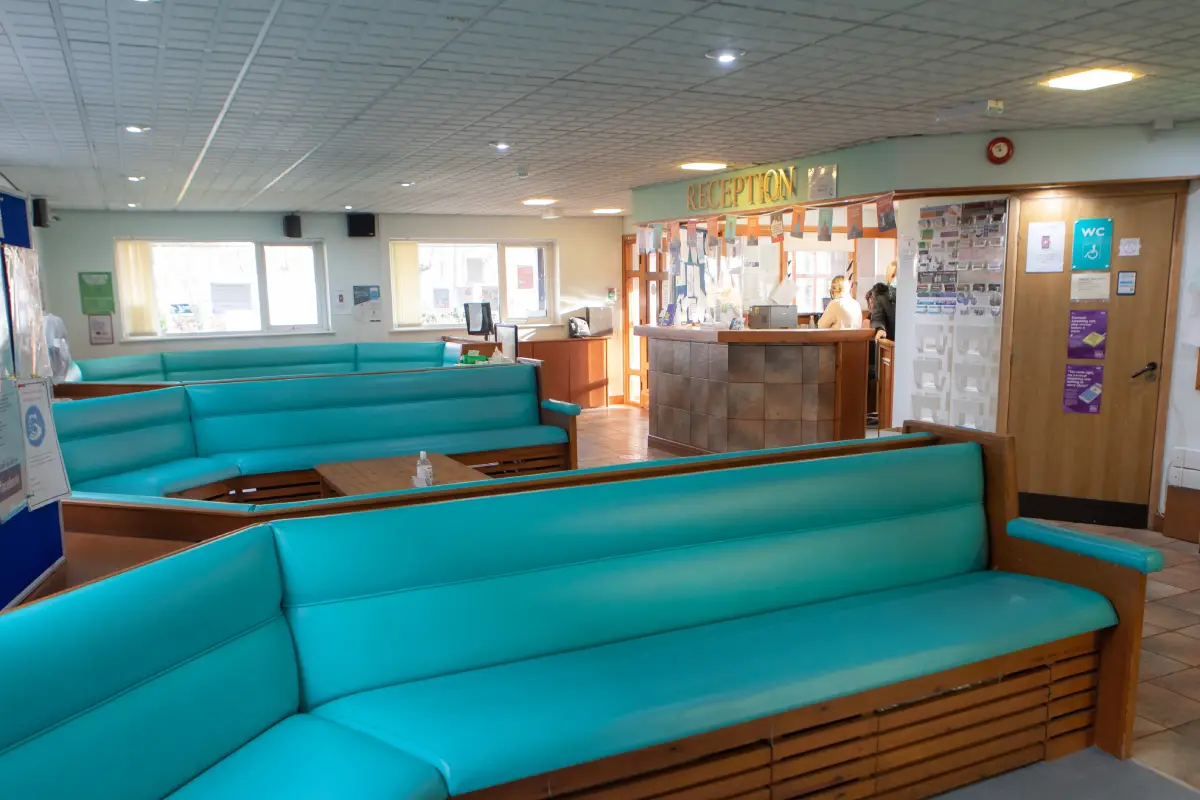
- You can sit and wait here until you are called for your appointment.
- The waiting room is open and spacious.
- There are three seating areas with cushioned sofa-style chairs.
- The floor is partly tiled and partly vinyl.
Sounds
The waiting room is usually calm, but the noise level may change depending on how busy the practice is.
- You may hear people talking quietly.
- Reception staff may speak with patients at the reception desk.
- Phones may ring or vibrate.
- A radio or information screen may sometimes play sounds.
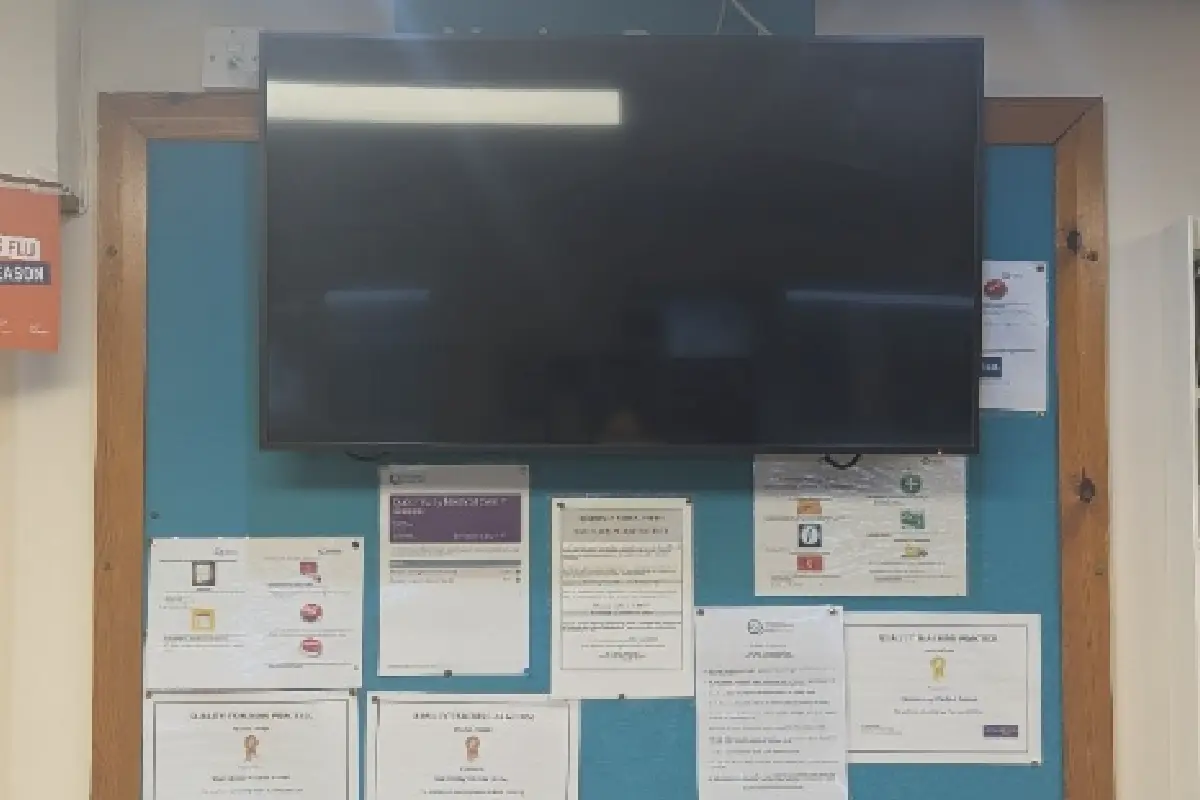
- When a patient is called for their appointment, the TV screen will play a short notification sound before displaying the patient's name and room number. The sound is brief but may be noticeable in the waiting room.
- Names may also be called by staff.
If you would like the sound to be turned down or switched off, please speak to a receptionist. If you need a quieter place to wait, our staff will do their best to help.
Visual Information
There are noticeboards on the walls throughout the waiting room, along with information screens displaying practice updates, health information, and appointment notices.
Clear signs are provided to help patients find consulting rooms and other areas of the practice.
If you find lots of signs or visual information overwhelming, please speak to a member of staff. We will be happy to help you find your way and answer any questions.
Sensory Information
The temperature in the waiting room is usually cool to neutral.
You may notice:
- Bright indoor lighting.
- Movement as patients arrive, leave, or are called for appointments.
- Mild smells from cleaning products.
If there is anything we can do to make your visit more comfortable, please let a member of our team know and we will do our best to help.
Being Called for Your Appointment
When it is time for your appointment, you will be called by a GP, Nurse, or another member of the clinical team.
You may be called in different ways:
- A member of staff may call your name aloud.
- A clinician may come to the waiting room to collect you.
- The TV screen may play a short notification sound and display your name and the room number you need to go to.
Once you have been called, you can make your way to the consulting room. Your consulting room may be upstairs. If this is an issue, please let us know either when you book the appointment or when you arrive.
If you would like someone to accompany you, a family member, friend, or carer is welcome to come with you where appropriate.
If you are worried about hearing your name being called or noticing the screen notification, please let reception know when you arrive. Our staff will do their best to support you.
Helpful Tips for Your Visit
You may find it helpful to:
- Arrive a little early for your appointment.
- Bring headphones or earplugs if you are sensitive to noise.
- Bring a comfort item or something familiar to hold.
- Ask for a quieter place to wait if needed.
- Bring a family member, friend, or support person with you.
If you need a break while you are waiting, you can leave the building at any time. Please let reception know before you leave and tell them when you expect to return.
We're Here to Help
It is always okay to ask for help.
If there is anything we can do to make your visit more comfortable, please speak to a member of staff. Our team is here to support you and will do their best to meet your needs.